Craft Does Not Retire
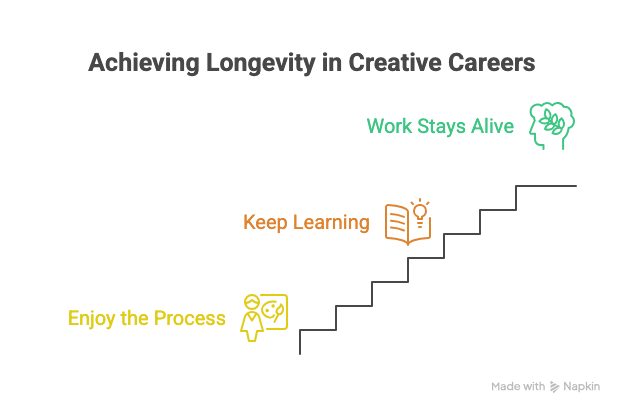
A director near 80 and a composer in his nineties shipped a 2026 movie. Work stays alive when you enjoy the process and keep learning.
KaKis Talkies started his review of Disclosure Day with the obvious reason to show up: Spielberg.
Then he listed the names.
By release week, the ages were hard to miss: Spielberg 79, John Williams 94, Janusz Kaminski 66, David Koepp 63, Paul Tazewell 61, Colin Firth 65.
These were not ceremonial names on a poster. Spielberg directed. Williams scored. Kaminski shot. Koepp wrote. Tazewell designed. Firth acted.
The public credits read less like nostalgia and more like people still inside the machinery of the work.
Software does this too. The stack keeps changing: cloud, Kubernetes, serverless, AI agents, whatever comes next. The fear forms quietly: maybe this field belongs only to people who can stay young forever.
Then a 2026 Spielberg film shows people much older than that fear still doing work at the highest level.
Not commenting on the work.
Doing the work.
Software confuses freshness with skill
Software has a strange relationship with time. We respect experience when a system breaks, but worship freshness when a new tool appears.
The engineer who knows the newest library can look more current than the person who has spent twenty years understanding tradeoffs. Freshness matters; refusing to learn is costly.
But freshness is not skill.
Skill survives tool changes. It reads messy problems and finds the shape underneath: race condition, bad data model, fake deadline, customer symptom instead of disease.
Those instincts do not come from one tutorial at 2 AM. They come from staying close to the work for years.
That is why the fear of age in software is only half true. The field punishes people who stop learning. But it also rewards judgment, taste, patience, debugging sense, and calm under pressure.
Those are not young-person advantages.
Boredom is the cliff
Age is not the enemy. Boredom is.
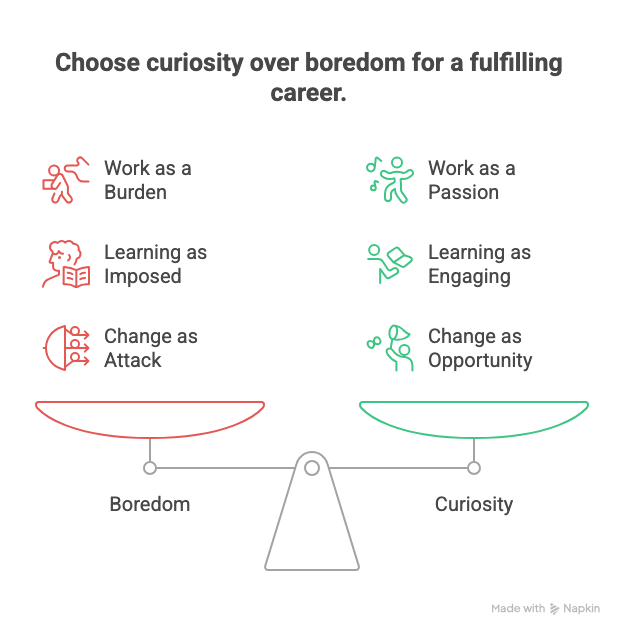
There is a version of work where every task becomes a burden. Learning becomes something imposed from outside. A new tool arrives, and the first reaction is irritation: another migration, another vocabulary, another reminder that the ground keeps moving.
That version of aging is dangerous because curiosity left.
You can see the opposite in people who practice long after earning the right to stop. Spielberg and Williams are not building resumes. They are returning to work that still feels alive.
That does not mean every day is joyful. No serious craft works like that. There are boring meetings, repeated takes, technical problems, fatigue, pressure, people to coordinate, deadlines to meet.
It means the process still gives back more than it takes.
That distinction matters in software. If programming is only a salary extraction machine, every change feels like an attack: AI tools, new architectures, younger engineers, the future itself.
But if there is still some love for the process, the same changes feel different. They are inconvenient, sometimes exhausting, but not humiliating. You are still in conversation with the craft.
Stay teachable
I used to think staying relevant meant staying perfectly updated.
That is impossible. The industry is too large now. A person can spend every day reading and still miss most of what happened.
The goal is to stay teachable.
That is a posture, not a calendar age. A teachable person can say, “I do not know this yet,” without treating it as an identity crisis. The same person can ask a younger engineer to explain a tool without feeling small.
This is where experience becomes powerful instead of stale. The older engineer does not need to compete with the newest tutorial. The older engineer needs to bring pattern recognition to it.
The better questions are older than the tool: what is this thing really doing, what old problem is it solving under a new name, what tradeoff is hidden in the marketing page, where will it fail at scale, and what will be hard to debug six months from now?
These questions come from years of scars. Scars are useful if they do not become fear.
Craft is a relationship
A job is a contract. You do work, someone pays you, and both sides try to make the exchange worthwhile. There is nothing wrong with that. Most of adult life runs on contracts.
Craft is different. Craft is a relationship with the work itself.
When software is only a job, the central question becomes: how long can I keep extracting income from this field? That question produces anxiety, because the answer depends on market cycles, hiring trends, AI, age bias, and other people’s opinions.
When software is craft, the question changes: can I keep getting better at this?
That question is harder, but more dignified. It puts some agency back in your hands. You cannot control whether the market loves your current title forever. You can control whether you keep sharpening the instincts beneath the title.
That is the real lesson I took from the Disclosure Day crew list. Age does not magically stop mattering. Nobody has to work into their eighties or nineties to prove a point. Passion does not solve every structural problem in an industry.
The lesson is smaller and more useful.
Good work can continue much longer than our fear tells us, if the person doing it has not become bored with the work.
The latest thing will keep changing: the names, the tools, and maybe the whole way software gets written.
But the posture still matters.
Stay close to the work. Stay curious enough to be taught. Keep enough joy in the process that learning does not feel like punishment.
Aging is not the cliff.
Losing the relationship with the craft is.
Co-written with AI. Credit the prose, blame the opinions.